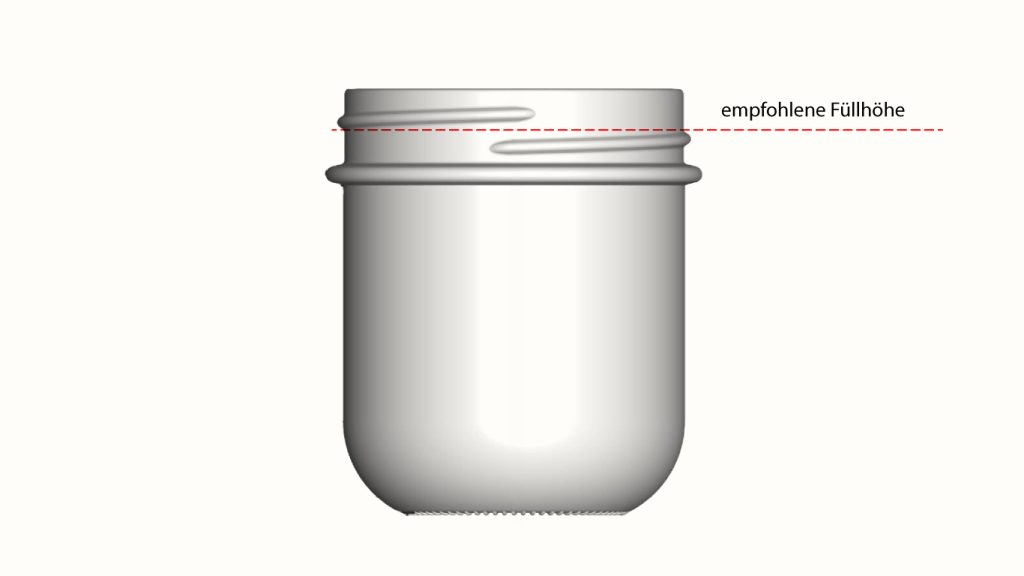
The brim capacity, as the name implies, refers to the filling quantity of a jar up to the brim of the neck. If foods are bottled into wide-mouth jars, an empty space, also known as headspace, is usually left free. When packaging in general, the headspace be should always kept as small as possible.
There is a difference when filling hot: with jams, for example, it is important to leave enough empty space between the contents and the twist-off lid.
You need about 8-10% empty space of the full brim volume in the jar to achieve a vacuum during cooling. Too little headspace is counterproductive, because then no reliable vacuum can develop. Well-intentioned “overfilling” of the glass is not recommended.
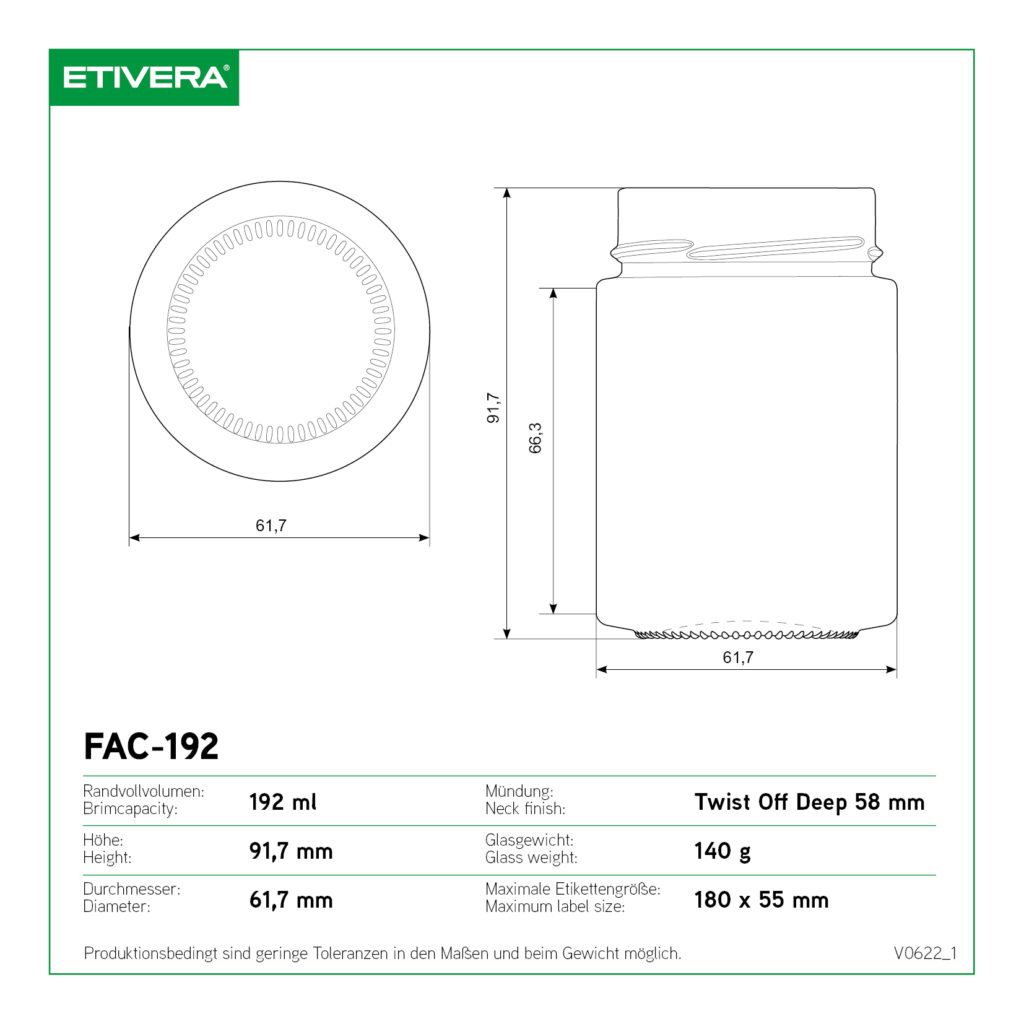
The actual filling quantity, i.e. the amount that can be filled into the preserving jar, therefore depends on the contents and processing.
In the case of glass bottles, we talk about the nominal capacity which is often given instead of the full brim capacity.